
With gratitude. With remembrance. With respect.
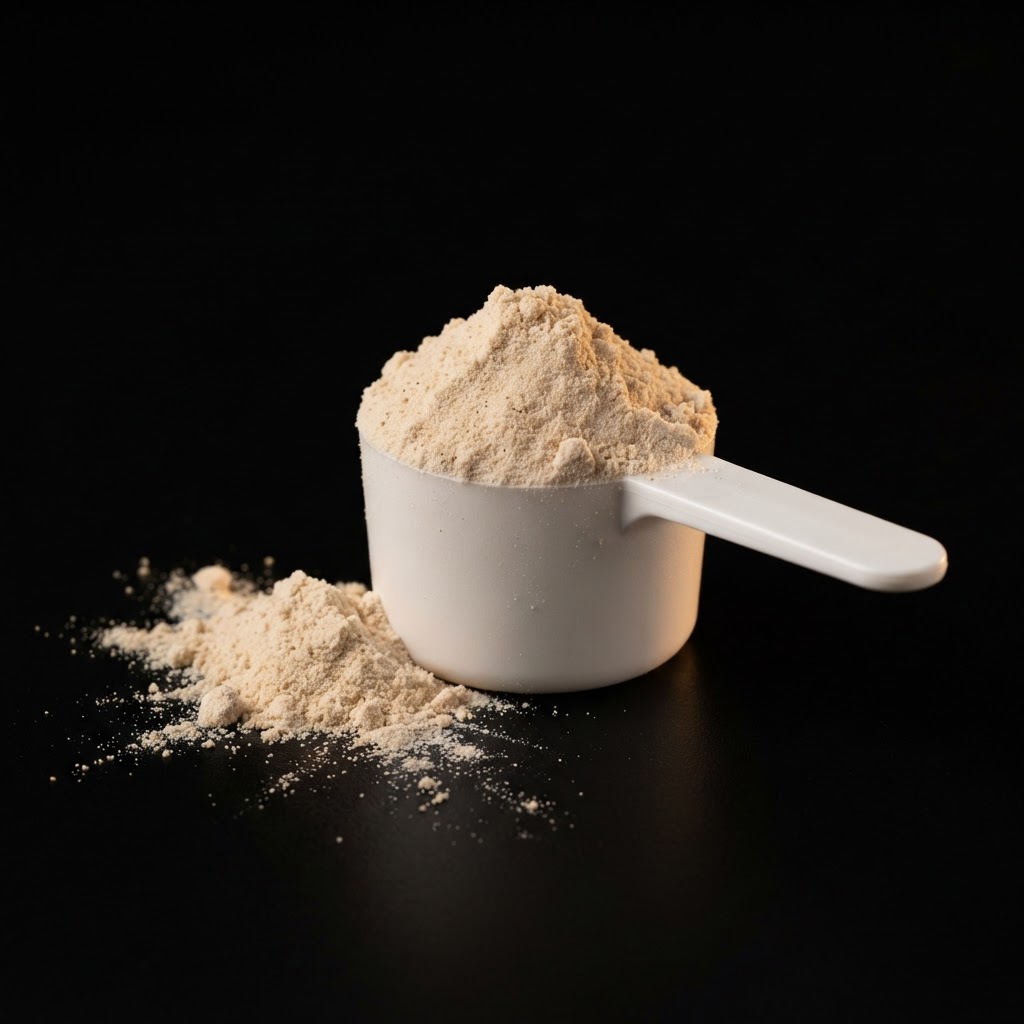
Ingredient Guide
Protein
What protein does, how much active people need and when a powder actually helps. Most people can meet their needs from food, so a supplement is a convenience, not a requirement.
What It Is
- Protein is one of the three macronutrients, alongside carbohydrate and fat. It's built from 20 amino acids, and nine of them are essential: your body can't make them, so they have to come from food.
- Protein supplements are concentrated protein from milk (whey and casein), egg, beef or plants such as soy, pea, rice and hemp, sold as powders, ready-to-drink shakes and bars.
What It Does in the Body
- Supplies the amino acids your body uses to build and repair muscle, bone, skin, enzymes, hormones and immune cells.
- After a protein-rich meal, and even more after resistance exercise, your muscles build new protein (muscle protein synthesis). The amino acid leucine helps switch this process on.
- Protein is more filling per calorie than carbohydrate or fat, which can help with appetite.
What Research Shows
Strong and Moderate are established. Mixed and Limited are preliminary. Insufficient means too little research to judge, and Not supported marks popular claims research doesn't back. How we rate evidence
- Strong evidence
With resistance training, eating enough total protein increases gains in muscle size and strength. In a 2018 analysis of 49 trials, extra protein stopped adding benefit at about 1.6 g per kg of body weight a day.
- Strong evidence
Total daily protein matters most. A powder helps only to the extent it brings you closer to your target; it isn't better than protein from food.
- Moderate evidence
Spreading protein across 3 to 5 meals of about 20 to 40 g each supports muscle building better than one or two large servings, though the long-term difference is less certain.
- Moderate evidence
Higher protein intakes help preserve muscle during weight loss and increase fullness.
- Moderate evidence
Older adults respond less to small servings and may need about 0.4 g per kg at a meal for the same muscle-building effect.
- Not supported
Claim: protein must be taken within 30 minutes after a workout. When daily protein is adequate, a strict post-workout window isn't supported.
Effective Amounts, When Established
- Minimum for adults (RDA): 0.8 g per kg of body weight a day. It prevents deficiency but isn't designed for training.
- Most active people: about 1.4 to 2.0 g per kg a day. For a 70 kg (154 lb) person, that's roughly 100 to 140 g.
- Per meal: about 0.25 to 0.4 g per kg, often 20 to 40 g, every 3 to 4 hours.
- Before sleep: 30 to 40 g of casein has been studied to support overnight muscle building.
- Resistance-trained people cutting calories may benefit from more, up to about 2.3 to 3.1 g per kg of lean (fat-free) mass.
Food Sources and Alternatives
- Chicken, fish, lean meat, eggs, Greek yogurt, milk and cottage cheese are complete proteins with all nine essential amino acids.
- Plant sources include tofu, tempeh, edamame, lentils, beans, chickpeas, seitan, nuts, seeds and whole grains. Eating a mix through the day covers every essential amino acid.
- For reference: 3 oz of cooked chicken breast has about 26 g of protein, 1 cup of cooked lentils about 18 g and one large egg about 6 g.
- A shake or bar is an alternative for busy days, travel or a small appetite, not a replacement for meals.
Potential Benefits
- Makes a daily protein target easier to reach when meals fall short.
- Supports muscle gain and recovery alongside resistance training when your intake was low.
- Helps you feel full and keep muscle while losing weight.
- Offers dairy-free and vegan options for different diets.
Risks and Interactions
- Gas, bloating or cramping, especially with lactose intolerance. Whey isolate contains less lactose than whey concentrate.
- Allergies: check the protein source and allergen statement for milk, egg, soy or legumes.
- Independent tests have found heavy metals such as lead in some protein powders. Third-party certification, such as NSF Certified for Sport, screens for contaminants.
- Some shakes and bars add a lot of sugar, calories or extra ingredients such as stimulants.
- With kidney disease, follow your clinician's protein advice; high intakes may not be appropriate.
Common Myths
Myth
More protein always means more muscle.
What the evidence says
Benefits level off around 1.6 g per kg a day. Training, sleep and total calories matter just as much.
Myth
You must have a shake right after training.
What the evidence says
Total daily protein matters far more than a narrow window. A protein-rich meal within a few hours works well.
Myth
High-protein diets damage healthy kidneys.
What the evidence says
Research in healthy adults hasn't shown kidney harm at typical sports-nutrition intakes. People with kidney disease need individual advice.
Myth
Plant proteins can't build muscle.
What the evidence says
Soy and blended plant proteins support muscle gain when total protein is adequate. A slightly larger serving makes up for lower leucine.
Myth
Your body can only use 30 g of protein at once.
What the evidence says
You digest and absorb nearly all the protein you eat. The muscle-building effect of a single meal tapers off, but the rest is still used.
Practical Tips
- Build each meal around a protein food first, then use a powder to fill the gap.
- On the label, check protein per serving, the protein source, added sugar and allergens.
- Prefer products with third-party certification, especially if you're tested in sport.
- If dairy upsets your stomach, try whey isolate or a plant blend.
- Count shakes, bars and fortified foods toward your daily total.
Related Ingredients and Products
Ingredients
Products in the library
Listed for comparison, not as recommendations. BLCPA 360 doesn't sell or endorse any brand, so check each label against the amounts above.


Sources
- International Society of Sports Nutrition position stand: protein and exercise (2017)
- Morton et al., British Journal of Sports Medicine: Protein supplementation and resistance training (2018 meta-analysis)
- Academy of Nutrition and Dietetics, Dietitians of Canada and ACSM: Nutrition and athletic performance (2016)
- NIH Office of Dietary Supplements: Supplements for exercise and athletic performance
- NSF Certified for Sport
